Maya archaeological site in Cancun, Mexico Photo: VCG Before becoming an award-winning science fiction writer, Baoshu was simply a fan fascinated by Hugo Award winner Liu Cixin's The Three-Body Problem. His desire to explore the universe created by the blockbuster trilogy led him to write The Redemption of Time (Remembrance of Earth's Past), a fan work that later became a published novel. Years later, Baoshu has become one of the notable voices in Chinese science fiction. He was honored with the Mao Dun Newcomer Award this year, one of China's most prestigious literary awards for young writers. Established in 2015, the award recognizes outstanding writers and critics under the age of 45. The award committee said his works have expanded the possibilities of science fiction through exploration of time, civilizations and the impact of technology on everyday life. The honor adds to a growing list of achievements. Baoshu had previously won the Galaxy Award, China's equivalent of the Nebula Awards. His short story Tasting the Future Delicacy Three Times was a finalist for the Hugo Award for Best Short Story in 2024. In his latest novel, The Sky of Kukulkan, published by New Star Press, Baoshu turns his fascination with the ancient Maya civilization into a story about humanity itself. The book is Baoshu's first major work after receiving the Mao Dun Newcomer Award. Set during the final period of the Maya Classic era, the novel follows a fallen prince who, with the help of a priestess, gradually uncovers the secrets behind astronomical movements, unusual solar phenomena and the legend of the Feathered Serpent deity. For Baoshu, the story is ultimately not only about the Maya, but also a reflection of humanity itself, its pursuit of knowledge and the universe, as well as the conflicts driven by human flaws. "I think the most fascinating part of this story is that the Maya civilization is a microcosm of humanity itself," Baoshu told the Global Times. "It reflects mankind's journey to explore the universe and seek truth, while also showing how human weaknesses, such as greed and hostility, can lead to endless conflicts within society."
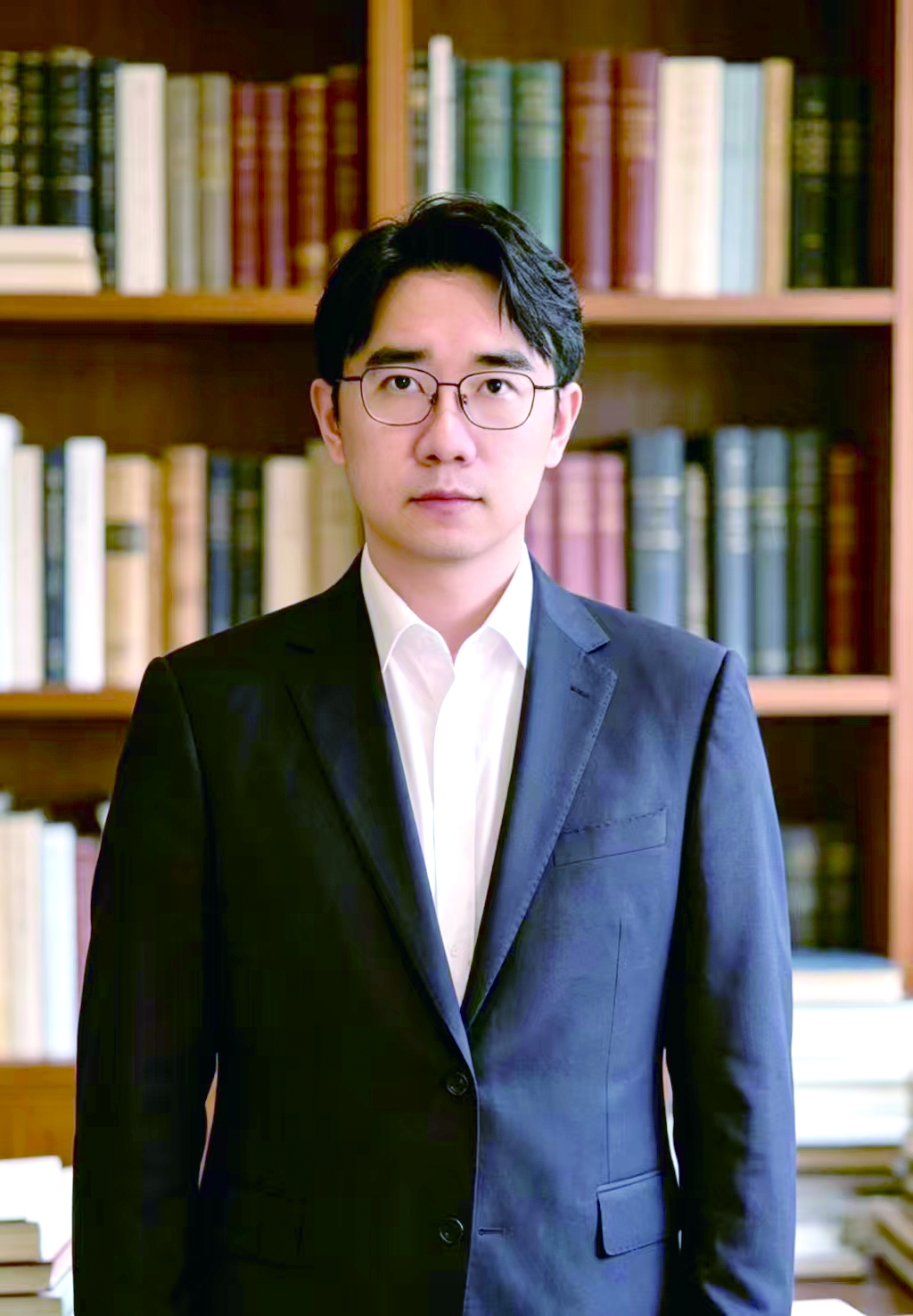
Chinese sci-fi writer Baoshu Photo: Courtesy of New Star Press The road to sci-fi Born in 1980, Baoshu developed his passion for writing early. After moving to Haiyan, East China's Zhejiang Province, at the age of 6 with his parents, who worked in nuclear power construction, he spent much of his childhood reading science fiction and popular science books in local libraries. As a primary school student, he began writing his own science fiction stories, although he said that his early works were immature. His pen name, "Baoshu," has a much simpler origin. More than two decades ago, he chose it casually as an online username because he was a fan of Chinese martial arts novelist Jin Yong and created several usernames inspired by characters from Jin Yong's works. Most disappeared over time, but "Baoshu" remained. After studying philosophy at Peking University, he continued writing short stories. His professional science fiction career began in 2010 while studying in Belgium, when his admiration for Liu Cixin's The Three-Body Problem inspired him to write the fan fiction novel The Redemption of Time (Remembrance of Earth's Past). "His work has always set a benchmark for me, a standard I hope to approach even if it remains a distant goal," he said. For Baoshu, The Redemption of Time (Remembrance of Earth's Past) was driven mainly by his love for Liu's fictional universe and his desire to explore the possibilities beyond the original trilogy. "The world created by The Three-Body Problem is so rich and diverse that you feel there are many stories behind it that were not told," he said. "I wanted to express some of those possibilities in my own way."
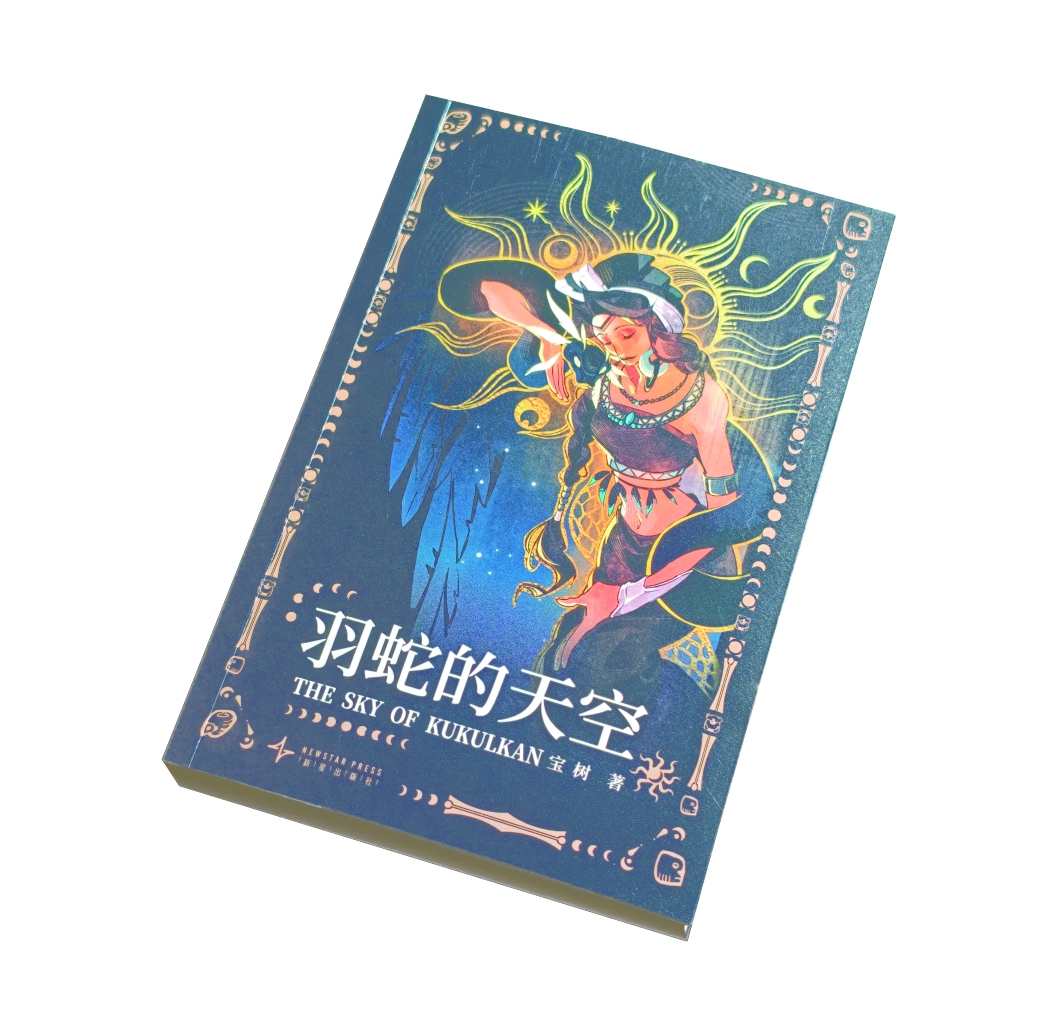
The cover of Baoshu's The Sky of Kukulkan. Photo: Courtesy of New Star Press Sci-fi future Baoshu said that, looking ahead, science fiction will continue expanding as technology changes society. With technology such as artificial intelligence (AI) advancing at an unprecedented pace, the boundary between science fiction and reality is becoming increasingly blurred. Ideas once imagined only in novels are now entering everyday life, creating new questions and possibilities for writers to explore. AI, for example, has created new creative opportunities and raised new questions about humanity's relationship with machines. But he noted that AI is not an entirely new topic for science fiction. "Science fiction has been writing about AI for many years," he told the Global Times. "At different stages, new technologies emerge and connect with new social issues, creating new possibilities for storytelling." He expects one major direction for future science fiction will be "science fiction realism" - stories that focus on how technology affects ordinary life, society and human emotions. Another challenge for Chinese science fiction is finding deeper connections with local culture. "Science fiction was once seen as a relatively foreign literary form because it originated overseas," Baoshu said. "But as the genre expands into deeper areas of social life, it also changes how we understand the past." He said, as science fiction continues to gain popularity in China, the genre is creating more opportunities for new voices. Efforts to promote new forms of popular literature have given people from different backgrounds more opportunities to write and share their voices. 。
亿咖通科技产品高级总监龚思颖表示,作为一家全球汽车智能化企业,亿咖通正在围绕国内外客户的不同需求,稳扎稳打布局国际化,并已在海外多地设立研发中心,承担本地化适配与开发工作。“从我自身负责的技术维度出发,亿咖通正在通过加快推进前瞻性工具链开发,引入 AI 大模型技术在代码生成、测试等研发环节中应用助力,目前在多个项目中的收效落地反响都不错。”中国汽研海外事业部出口认证总监何力勇对于企业出海给出诚恳意见,中国零部件企业在研发出海产品时一定要提前了解相关法规标准,才能根据当地标准设计产品,减少不必要的耗费。万丰奥特控股集团管理中心总监董瑞平则提出了对于海外竞争的担忧,呼吁中国零部件出海不要把国内的“内卷”带向海外形成新的“外卷”。与会嘉宾对此都深表赞同。罗兰贝格汽车营销大使兼合伙人施志刚则适时给零部件供应商提出建议,汽车供应商应专注于核心领域和地区,控制成本基础,并建立战略合作伙伴,并提出中国车企走出去、中国设计走出去、总部设计中心突破、中国资本走出去、海外新势力切入五大出海路径,鼓励中国零部件企业以全球化市场为目标,探索多元合作方式。走出去的是产品,走进去的是能力,走下去的是共赢。当中国供应链企业从成本承接者变为技术赋能者,全球产业新秩序正在重构。机遇总是与挑战并存,正如桂俊松在致辞中所言,中国汽车产业的国际化征程依然面临许多严峻考验,如国际贸易环境的不确定性,不同区域在技术标准、法规要求上的显著差异,本地化运营中涉及的文化融合、合规管理、成本控制,等等。面对这样的形势,中国汽车零部件产业要实现高质量的出海,就更需要“协同”与“创新”的双轮驱动,以构建更紧密和谐的产业生态。中国汽车零部件产业的全球化进程,正经历着从规模扩张向质量提升、从成本驱动向创新驱动、从单一环节突破向全生态构建的历史性转变。而今天发布的《白皮书》也清晰地印证了这一趋势。着眼未来,中国汽车零部件企业正以协同创新为桨,以智能驱动为帆,共同驶向全球汽车产业的星辰大海。附
中国汽车供应链百强
全球汽车供应链百强
。
Current article:http://es43vqw.shaihanhuangwoshang.cyou/10efa/7mt1sxd.html